Costs ·
How much does a commercial cost?
Estimated production budgets, sample costs, and what to allow for talent, Los Angeles permits, and airtime.
Now booking podcast studio builds, nationwide Now booking podcast studio design and builds, nationwide.
See the studiosSix customer stories, the lesson in each, and planning allowances for a similar new shoot.
 Mauricio Cimino Founder and director of photography
The short answer
For planning in USD, as of October 2026, allow from $1,500 for a customer self-recording with professional editing. For one on-location interview with supporting footage, allow about $3,500–$10,000+.
Key takeaways
Those figures are planning allowances for a new shoot of the scope described, not the actual budgets behind the films below. Use the examples to choose a format: a reassuring patient story, an operational proof point, or a multi-voice montage. Then match that format to a realistic scope before you ask for a quote.
A testimonial video is a customer explaining, in their own words, what problem they had, why they chose you, and what changed afterward. Keep it close to one job or decision. Cost moves with interview count, filming location, supporting footage, and the number of finished versions you need.
Supporting footage, often called B-roll, means shots of the work, product, clinic, or daily routine that play over or between interview answers. Cutdowns are shorter versions cut from the main interview for social feeds, ads, or sales follow-ups.
The table translates current U.S. provider packages into comparable allowances. It is not a national survey, and it does not reproduce any featured film’s invoice.
| Scope | Allowance |
|---|---|
| Customer self-records, professional editEditing, a 60–90-second main video, social cutdowns, subtitles, and limited revisions. This does not price the act of recording on a phone. | From$1,500 |
| One remotely directed interviewDirected remote recording and coaching, editing, and agreed versions. | About$2,000–$4,500+ |
| One local interview with supporting footageOn-site interview, working footage, and an edited story with clips. Use the low end only for tightly scoped local work. | About$3,500–$10,000+ |
| Two to four interviews at one locationA shared batch with individual edits and clips, not a per-video price. | About$8,500–$15,000total |
The self-capture and remote starting prices come from Explainly’s displayed testimonial packages. They are $1,500 for guided self-recording and $2,000 for a team-directed remote interview.
The local and batch anchors come from 7 Hills Productions’ 2026 packages. It lists $3,500 for one local customer with an interview and supporting footage. Two to four customers filmed back-to-back in one place cost $8,500–$15,000.
The upper end of managed remote is bracketed by CaseLeap’s Create package at $4,250 plus a $199 media license, or $4,449 total.
Those packages do not include everything. Allowances above exclude unquoted travel, special location fees, extra versions and aspect ratios, and additional graphics or animation. They also exclude rights and licensing beyond what each package states, and media spend.
Inclusions also vary by provider. Revision rounds, raw footage, subtitles, and the number of cutdowns are not the same everywhere. Confirm what counts as a finished deliverable before you compare two quotes.
A 60-second film can still require site access, coordination, and edit time, while a longer interview does not automatically cost more to shoot.
Cost calculator
Price your testimonial in a minute.
Six questions. A range you can take to your team.
Sample estimate
$4k – $8k
Testimonial · 1 shoot day
We chose these six to compare three buying problems: patient reassurance, operational proof, and multi-voice stories. The observations below concern the spoken structure in the public transcripts, not a visual review of camera work or playback.
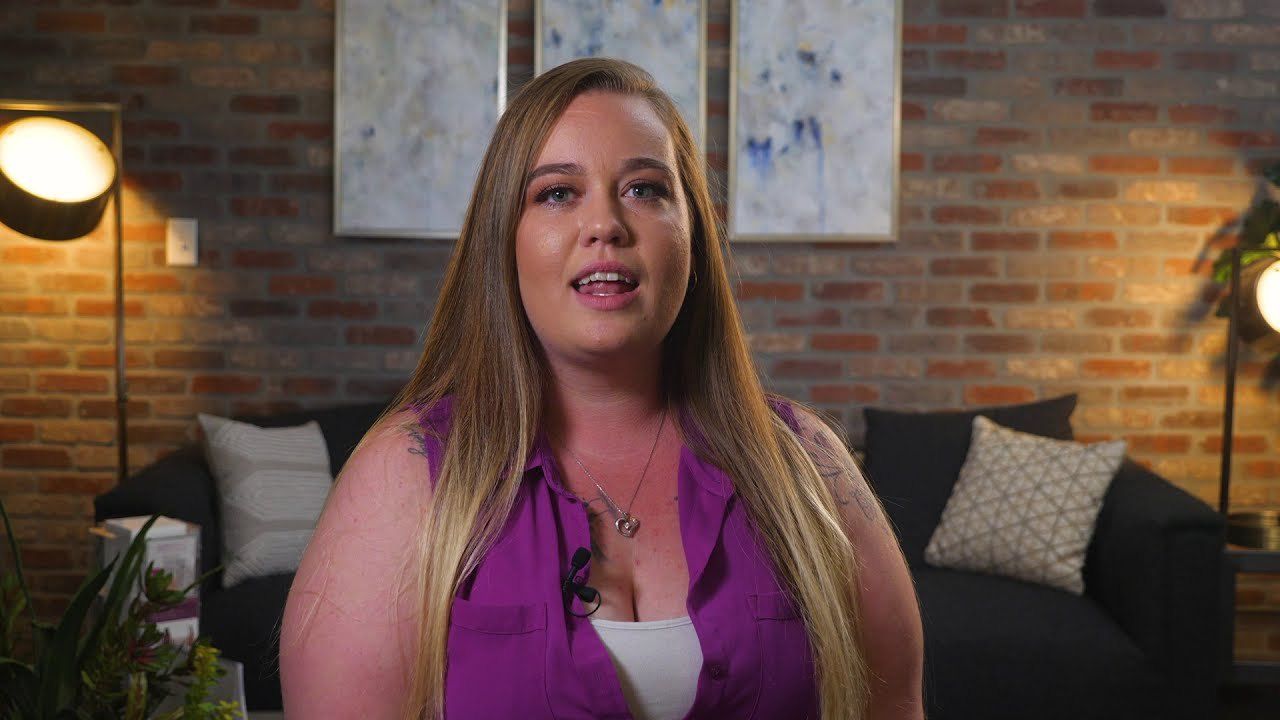
Watch the Vein Envy patient story on YouTube (Casey, 1:09, uploaded by Vein Envy in 2020).
The account follows a simple sequence: a difficulty during the workday, making the appointment and meeting the doctor, then staff calming her nerves around the procedure. The middle carries the film. She describes apprehension and how the team responded, rather than offering broad praise after the fact.
That makes it a useful model when prospects are nervous about dealing with a clinic. A process-and-reassurance story answers, “What will it feel like to go there?” Ask for one experience, in order, and let comfort carry the message instead of asking for general compliments.
One nervous-visitor story cannot establish a typical medical result, and the edit should not imply one. Plan a new version as one interview plus relevant clinic footage, with authorization and privacy handled before shoot day. This matches one local interview with supporting footage in the table above.
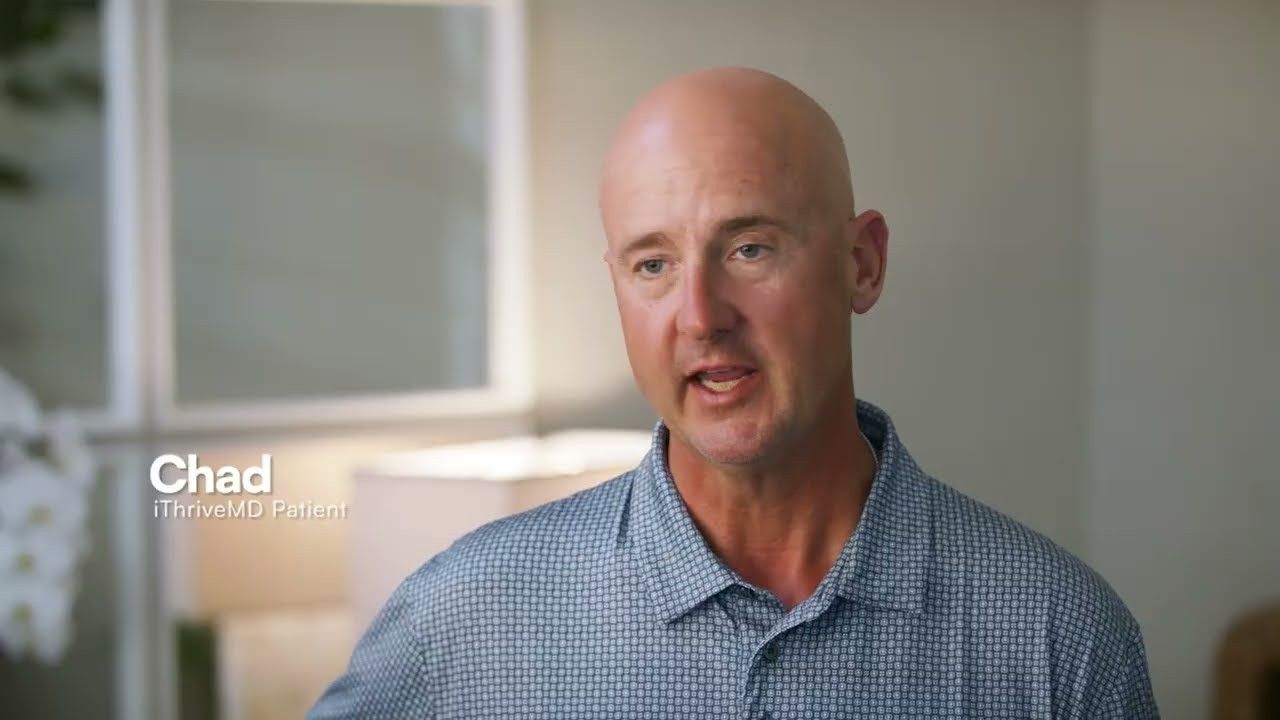
Watch the iThriveMD patient story on YouTube (Chad, 1:08, uploaded by iThriveMD in 2026).
This one opens with a personal result, then spends its second half on energy, feeling in control, and wanting to maintain the change. The account explains why the change matters in daily life, so the film does not stop at a number.
Use this structure when the outcome is the hook but cannot stand alone. Start with the result that defines the subject, then move quickly to routine and motivation. Have the clinic review any health language so the edit preserves what the patient meant without turning a personal account into medical proof.
Outcome-led stories carry more review burden. Do not treat this patient’s account as evidence of what others can expect. Coordinate substantiation and review with the clinic.
A comparable new commission is again one local interview with supporting footage, with time allowed for clinical review.
Watch the AVANT Tecno testimonial on YouTube (Frank of Albano Farms, 1:00, uploaded by Lemonlight in 2025).
Frank introduces himself as a farm co-owner, then talks through jobs. He describes maneuvering around barns, avoiding floor damage, stacking hay on trucks, and covering several tasks with one loader. He connects the machine to specific constraints such as tight space, delicate floors, and varied lifting, instead of reciting a feature list. Those constraints do the selling.
That task-level detail is what physical-product buyers need to hear. Name the jobs to cover on site. Connect each specification to a constraint the buyer recognizes: the doorway it must fit through or the surface it cannot damage. Brief the crew around working equipment and plan safe access.
Working footage is the complication here. You need the machine doing real work, the site available, and someone who can coordinate safely. Those assumptions can push a new shoot above the low end of the local range even when the final film runs only a minute.
Think one local interview with supporting footage, with site coordination priced in.
Watch the Lightspeed testimonial on YouTube (Lisa of Squash Blossom, 1:35, uploaded by Lemonlight in 2025).
Lisa opens on purchase orders, then widens to inventory, choosing software, and using live information to manage while away. The repeated clerical job makes an abstract benefit concrete: less time on ordering, clearer stock decisions. Her account describes Lightspeed and NuORDER together, so any workflow improvement belongs to that combined setup, not to one product alone.
Borrow that discipline for operational software. Pick the one task your buyer repeats weekly, show the before routine, then show the decision it now supports. Approved screen captures can help, but only if they match what the speaker actually described and the customer clears them for public use.
Accuracy is where this format succeeds or slips. Keep the claim with the person who made it and make sure demonstration material matches the story. For budgeting, allow one local interview with supporting footage, plus cleared captures only if you need them and have permission to publish them.
Watch the Osmo testimonial on YouTube (parent montage, 1:00, uploaded by Lemonlight in 2025).
Several parents speak briefly about different uses: early math, coding, early reading, and what children do during screen time. The coherence comes from the shared question underneath: what does productive screen time look like here?
That division of labor is the reason to choose a montage. One short film can cover three or four use cases without forcing one family to carry them all. Four versions of the same praise are interchangeable, so cast for distinct uses.
More voices mean more scheduling, more answers to sort through, and more careful editing, even when the master stays at a minute. If children would appear in your version, plan permissions, supervision, and time limits early. Budget for two to four interviews at one location, assuming participants can share a setup.
Watch the Asana customer compilation on YouTube (four speakers, 1:49, uploaded by Asana in 2024).
Each speaker names a role and organization, then answers the same prompt about a favorite feature. The answers diverge usefully: rules and automation, Teams and email integration, cross-project flexibility, and seeing the same task in multiple places. One speaker identifies himself as an Asana solutions partner, so this is a mixed cast of users and a partner, not four independent buyers.
Use this format for a use-case survey, not a deep customer story. One repeated question keeps the edit clean, while varied roles give different buyers an entry point. It fits a feature or integration page where visitors are scanning for their own workflow.
Breadth costs you the arc (problem, choice, change) that makes a single-case film persuasive. Do not expect a compilation to do the work of a case study.
Like Osmo, it maps to a hypothetical batch of two to four interviews at one location where participants can share a setup. Distinct answers still require directing and edit time.
Start with capture method. Remote is a recording method, not a quality verdict.
A directed remote interview with coaching, clean audio, name titles, and added product or work footage can look considered. Decide whether you need a crew in the room or a director on a call. Put editing and versions in the agreed scope rather than treating them as extras.
Then decide on voices. One interview gives you depth and a clear arc from problem to decision to change. A shared batch can deliver several stories and cutdowns from one setup, but only if people are actually available together.
Do not stack praise voices to sound credible; give each speaker a distinct task, problem, or use case, as the Osmo and Asana films do in different ways.
Supporting footage and versions drive the rest of the budget. Relevant work footage, clinic context, or cleared screen captures make the story legible, but they require access, releases, and edit time. The same applies to deliverables: extra aspect ratios, languages, subtitles, and 15-second cuts add edit and review time even when filming stays the same.
To keep costs from drifting, confirm the customer, the one story worth telling, and location access. Agree on deliverables, including main length, cutdowns, subtitles, and revision rounds, then film and edit to that brief.
Lock interview count, location and travel, supporting footage, graphics, versions, revisions, and licensing early. These decisions affect the allowance in the table.
Clinics carry two extra duties: privacy and proof.
For privacy, U.S. providers covered by HIPAA need appropriate written authorization before giving a film crew access to patients’ protected health information. That includes who can be in the room and what appears in backgrounds and screens. Blurring a face afterward does not replace permission beforehand.
Work through the clinic’s authorization process first, plan backgrounds and barriers, and limit who is present on shoot day. The HHS guidance on media crews and patient privacy states the standard.
For proof, endorsements need to be honest and preserve the meaning of what the person actually experienced. Disclose an unexpected material connection that would change how viewers judge the story, such as a paid or partner relationship. A single patient’s result does not establish what others can expect, and adding “results not typical” does not fix an implied typical-results claim.
Keep the edit faithful, identify relevant relationships, and have the clinic substantiate and review any outcome language. The FTC’s Endorsement Guides FAQ explains the disclosure and results principles.
Plan a 60- to 120-second main story for website and sales use, plus 15- to 30-second cuts for social, email, and proposals. Those are practical starting points for briefing and editing, not proven optimal lengths.
Put the full story where a decision is being weighed: service, product, or pricing pages and sales follow-ups. Use the cutdowns as pointers that preserve context and send viewers to the full account. Open with the most specific moment, not a logo or a generic claim about care or quality.
Name one customer, one location, and the versions you need: main story plus two or three cuts with subtitles. Then you can ask Honey Video for a scoped quote without guessing at formats first.
Choose the format first.
Interviews, footage and versions set the cost.
Settle patient privacy and proof before the shoot.
How we priced this
The prices are planning allowances in USD for a new shoot of comparable scope, checked in October 2026 against the packages Explainly, 7 Hills Productions, and CaseLeap display on their own pages. They are not a national survey, Honey Video quotes, or the actual budgets behind the six films. The film notes come from the spoken structure in each film’s public transcript, not a visual review. The privacy and endorsement guidance comes from HHS and the FTC. Confirm current prices and inclusions before you commit.
Sources
Costs ·
Estimated production budgets, sample costs, and what to allow for talent, Los Angeles permits, and airtime.
Costs ·
Scope-based budgeting guide with real packages, a sample budget, and LA permit facts.
Costs ·
Set a realistic video budget, see what it buys, and compare quotes with confidence.
Share the customer, the location, and the versions you need.